
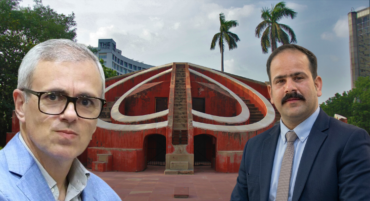
By: Asif, President, Jammu Kashmir National Democratic Party (JKNDP)
The Jammu & Kashmir National Conference (JKNC) has recently grabbed headlines by announcing a massive protest at Jantar Mantar in New Delhi, demanding the immediate restoration of full statehood to Jammu and Kashmir. Invitations have been dispatched to over 50 national and regional opposition parties, and the event has been strategically clocked for the opening day of the Parliament’s Monsoon Session to ensure maximum national media spotlight. While this move might seem attractive on the surface, a deeper analytical look reveals a different reality: this is not an authentic struggle for the welfare of J&K’s citizens, but a well-choreographed political drama.
As a responsible political force, the Jammu Kashmir National Democratic Party (JKNDP) believes it is our duty to place certain fundamental, uncomfortable questions before the public—questions that the current ruling dispensation must answer.
Why Play the Victim When You Hold the Mandate?
The most glaring logical contradiction in this entire episode is simple: Jammu and Kashmir is no longer under Governor’s rule, central bureaucracy, or an administrative vacuum. The resilient people of J&K turned out in record numbers to exercise their franchise and democratically elect their own government. Omar Abdullah is the Chief Minister, and the National Conference enjoys a comfortable majority with a clear public mandate.
When the electorate has sent you to the sacred halls of the legislative assembly to debate, formulate policies, and pass laws on their behalf, why are you abandoning that democratic power? Why choose the pavements of Srinagar or the streets of New Delhi over the floor of the Assembly?
The Supreme Power of a Legislative Resolution: An elected government possesses the ultimate constitutional authority to convene a special session of the assembly, debate the statehood timeline, and pass an official, binding resolution demanding its restoration. A resolution passed by a state legislature carries profound democratic and legal weight that no central administration can casually ignore.
Constitutional Decorum vs. Street Agitation: When you hold the official ‘pen and power’ of governance, why resort to placards and sit-ins? Is waving banners at Jantar Mantar a convenient shortcut to avoid the demanding, serious responsibilities of governance inside the civil secretariat?
The True Chronology Behind the Delhi Show of Strength
The Union Government has previously stated on record—both before the Parliament and the Supreme Court of India—that statehood will be restored to Jammu and Kashmir at an appropriate time following assembly elections. Now that an elected government is fully functional, the mature, institutional next step is to engage in structured, high-level bilateral dialogue with the central leadership to fast-track this administrative transition.
Instead, choosing the path of public agitation strongly indicates that this protest is less about the immediate growth of J&K and more about the National Conference attempting to manufacture a national profile. Gathering 52 political parties in the heart of Delhi is a text-book public relations exercise designed to play the victim card on a national stage ahead of upcoming political cycles. It is a gimmick meant for political headlines, not practical governance.
J&K Needs Development and Governance, Not Theatrics
The people of Jammu and Kashmir did not wait years for a democratic election just to watch their Chief Minister and cabinet ministers abandon their desks to hold dharnas in New Delhi. The mandate given by the public was for their leaders to sit in the civil secretariat and work 24/7 on reviving the economy, creating employment for our youth, upgrading dilapidated infrastructure, and ensuring regional security, electricity, and clean water.
The Jammu Kashmir National Democratic Party (JKNDP) firmly believes that if the National Conference is genuinely serious about restoring statehood, it must immediately stop using New Delhi as a theater for political opportunism. They must bring the voice of the people back to where it belongs—the dignity and legal framework of the Jammu and Kashmir Legislative Assembly. Democracy is strengthened by the integrity of elected institutions, not by street-side dramas. It is time for the ruling party to stop campaigning and start governing.